SPEECHTEXTER
...

Php 7.2.34 Exploit Github (4K · 720p)

Disclaimer: This article is for educational purposes regarding legacy software risks. The author does not condone unauthorized access to computer systems.

response = requests.get(target + exploit_payload, headers=headers) if "uid=" in response.text: print(f"[+] VULNERABLE: {target} - Shell spawned.") else: print("[-] Patched or not vulnerable.")

headers = { "User-Agent": "Mozilla/5.0", "Payload": "CVE-2019-11043" } php 7.2.34 exploit github

Many of these repositories are traps. Security researchers have found that 15% of repositories tagged "exploit" actually contain RATs (Remote Access Trojans) disguised as the exploit. When you run the script to hack yourself, you are actually giving the repository owner a backdoor to your machine. Mitigation: How to Secure PHP 7.2.34 Today If you cannot upgrade to PHP 8.x immediately, you must implement virtual patching. 1. Use a WAF (Web Application Firewall) Cloudflare, ModSecurity, or Sucuri have virtual patches for CVE-2019-11043. A WAF will block the malicious HTTP requests before they hit your PHP processor. 2. Harden php.ini While you search for php 7.2.34 exploit github , remember that many exploits rely on specific settings. Disable dangerous functions:

This article explores the most dangerous exploits associated with PHP 7.2.34, what you will find on GitHub, and why you need to upgrade immediately. GitHub is the primary platform for "White Hat" (ethical) and "Gray Hat" hackers to share code. When a developer tags a repository with php-7.2.34-exploit , they are usually demonstrating a vulnerability that the maintainers refuse to patch (due to EOL) or demonstrating how to chain known CVE's (Common Vulnerabilities and Exposures) together. Security researchers have found that 15% of repositories

If you found this article because you are trying to hack a server: Use your skills for defense. If you found this article because you are running PHP 7.2.34 in production: Take it offline tonight. Every minute you wait, a bot on the internet is scanning you with a script pulled directly from GitHub.

# Example snippet from a typical mass-exploit script (simplified) import requests import sys target = sys.argv[1] Payload specific to PHP 7.2.34's parsing bug exploit_payload = "?a=%0A%0A<?php system($_GET['cmd']); ?>%0A" Released in late 2020

Published: [Current Date] Category: Cybersecurity & Legacy Software Introduction: The End of Life Dilemma PHP 7.2.34 holds a unique, dangerous place in web development history. Released in late 2020, it was one of the final security releases for the PHP 7.2 branch before it officially reached End of Life (EOL) on November 30, 2020. This means that after this date, the PHP development team stopped patching security vulnerabilities.

SpeechTexter is a free multilingual speech-to-text application aimed at assisting you with transcription of notes, documents, books, reports or blog posts by using your voice. This app also features a customizable voice commands list, allowing users to add punctuation marks, frequently used phrases, and some app actions (undo, redo, make a new paragraph).

SpeechTexter is used daily by students, teachers, writers, bloggers around the world.

It will assist you in minimizing your writing efforts significantly.

Voice-to-text software is exceptionally valuable for people who have difficulty using their hands due to trauma, people with dyslexia or disabilities that limit the use of conventional input devices. Speech to text technology can also be used to improve accessibility for those with hearing impairments, as it can convert speech into text.

It can also be used as a tool for learning a proper pronunciation of words in the foreign language, in addition to helping a person develop fluency with their speaking skills.

using speechtexter to dictate a text

Accuracy levels higher than 90% should be expected. It varies depending on the language and the speaker.

No download, installation or registration is required. Just click the microphone button and start dictating.

Speech to text technology is quickly becoming an essential tool for those looking to save time and increase their productivity.
Features

Powerful real-time continuous speech recognition

Creation of text notes, emails, blog posts, reports and more.

Custom voice commands

More than 70 languages supported

Technology

SpeechTexter is using Google Speech recognition to convert the speech into text in real-time. This technology is supported by Chrome browser (for desktop) and some browsers on Android OS. Other browsers have not implemented speech recognition yet.

Note: iPhones and iPads are not supported

List of supported languages:

Afrikaans, Albanian, Amharic, Arabic, Armenian, Azerbaijani, Basque, Bengali, Bosnian, Bulgarian, Burmese, Catalan, Chinese (Mandarin, Cantonese), Croatian, Czech, Danish, Dutch, English, Estonian, Filipino, Finnish, French, Galician, Georgian, German, Greek, Gujarati, Hebrew, Hindi, Hungarian, Icelandic, Indonesian, Italian, Japanese, Javanese, Kannada, Kazakh, Khmer, Kinyarwanda, Korean, Lao, Latvian, Lithuanian, Macedonian, Malay, Malayalam, Marathi, Mongolian, Nepali, Norwegian Bokmål, Persian, Polish, Portuguese, Punjabi, Romanian, Russian, Serbian, Sinhala, Slovak, Slovenian, Southern Sotho, Spanish, Sundanese, Swahili, Swati, Swedish, Tamil, Telugu, Thai, Tsonga, Tswana, Turkish, Ukrainian, Urdu, Uzbek, Venda, Vietnamese, Xhosa, Zulu.

Instructions for web app on desktop (Windows, Mac, Linux OS)


Requirements: the latest version of the Google Chrome [↗] browser (other browsers are not supported).

1. Connect a high-quality microphone to your computer.

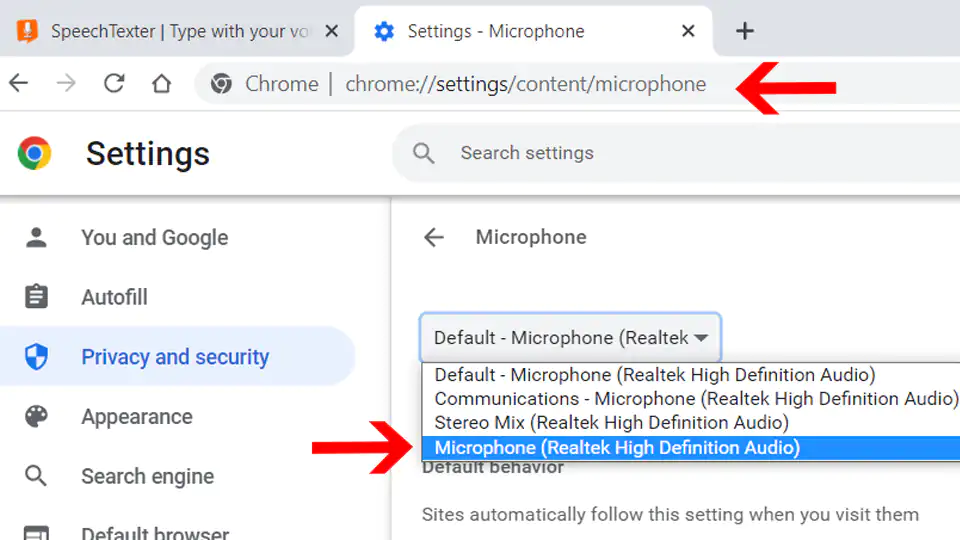
2. Make sure your microphone is set as the default recording device on your browser.

To go directly to microphone's settings paste the line below into Chrome's URL bar.

chrome://settings/content/microphone


Set microphone as default recording device

To capture speech from video/audio content on the web or from a file stored on your device, select 'Stereo Mix' as the default audio input.

3. Select the language you would like to speak (Click the button on the top right corner).

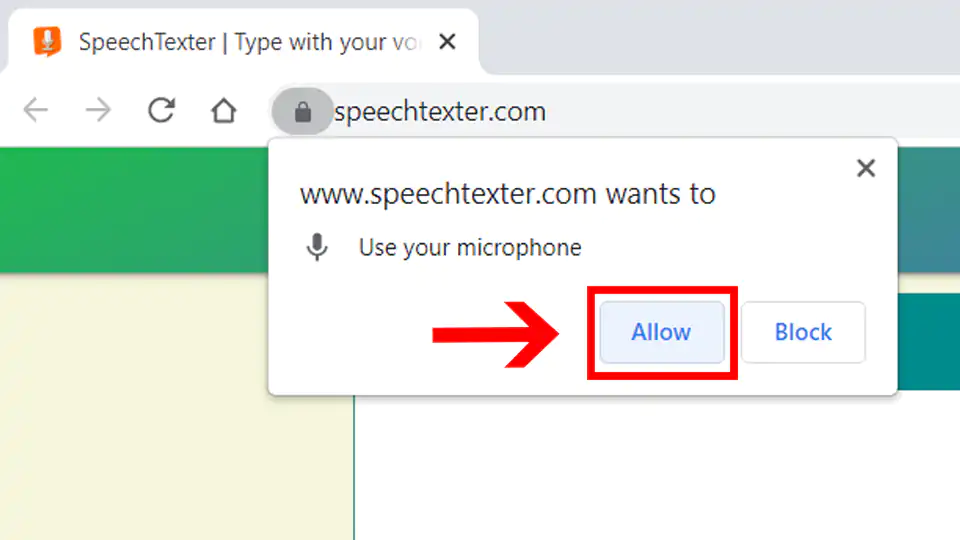
4. Click the "microphone" button. Chrome browser will request your permission to access your microphone. Choose "allow".

Allow microphone access

5. You can start dictating!

Instructions for the web app on a mobile and for the android app (the android app is no longer supported)


Requirements:
- Google app [↗] installed on your Android device.
- Any of the supported browsers if you choose to use the web app.

Supported android browsers (not a full list):
Chrome browser (recommended), Edge, Opera, Brave, Vivaldi.

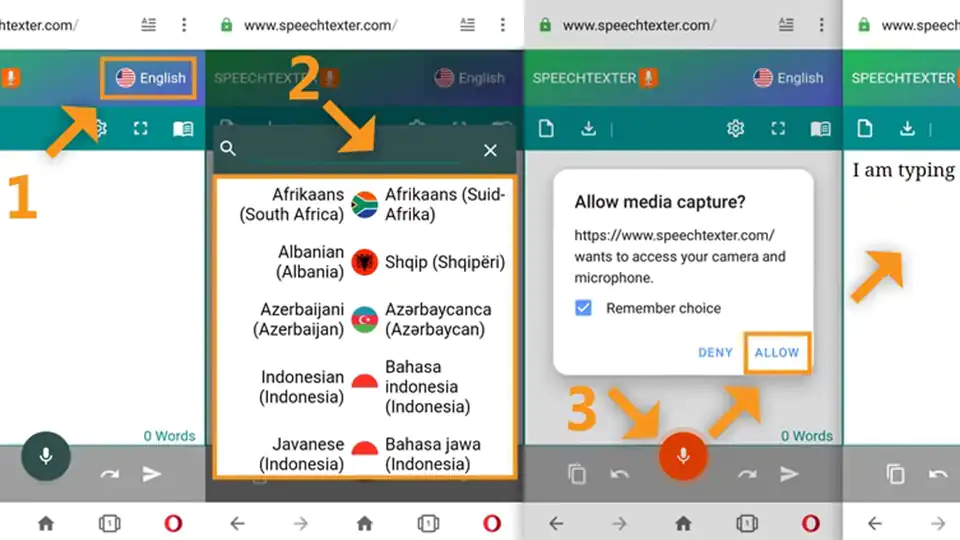
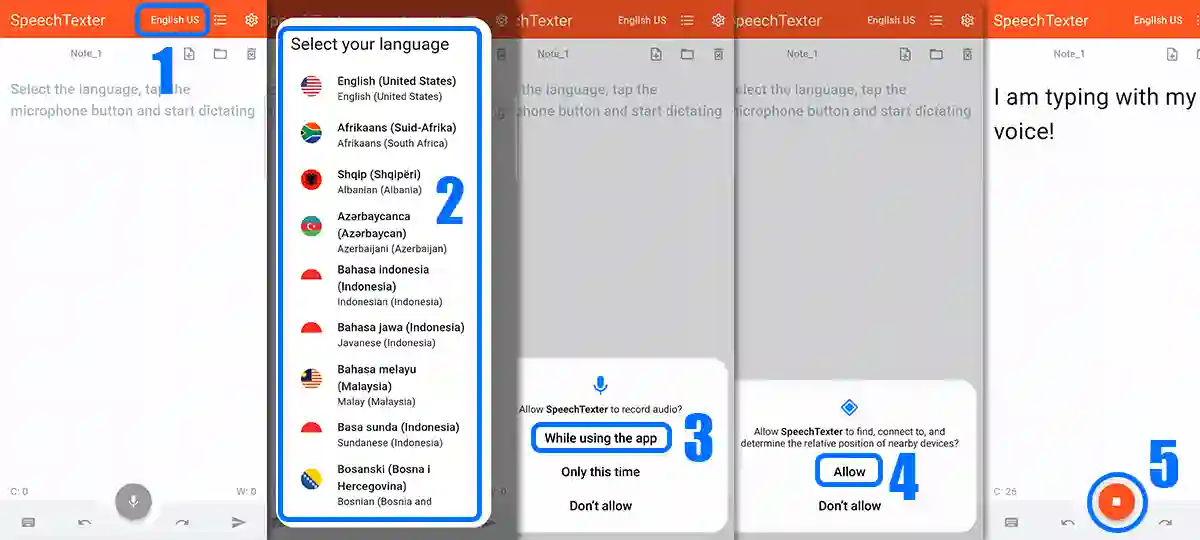
1. Tap the button with the language name (on a web app) or language code (on android app) on the top right corner to select your language.

2. Tap the microphone button. The SpeechTexter app will ask for permission to record audio. Choose 'allow' to enable microphone access.

instructions for the web app
web app

instructions for the android app
android app

3. You can start dictating!

Disclaimer: This article is for educational purposes regarding legacy software risks. The author does not condone unauthorized access to computer systems.

response = requests.get(target + exploit_payload, headers=headers) if "uid=" in response.text: print(f"[+] VULNERABLE: {target} - Shell spawned.") else: print("[-] Patched or not vulnerable.")

headers = { "User-Agent": "Mozilla/5.0", "Payload": "CVE-2019-11043" }

Many of these repositories are traps. Security researchers have found that 15% of repositories tagged "exploit" actually contain RATs (Remote Access Trojans) disguised as the exploit. When you run the script to hack yourself, you are actually giving the repository owner a backdoor to your machine. Mitigation: How to Secure PHP 7.2.34 Today If you cannot upgrade to PHP 8.x immediately, you must implement virtual patching. 1. Use a WAF (Web Application Firewall) Cloudflare, ModSecurity, or Sucuri have virtual patches for CVE-2019-11043. A WAF will block the malicious HTTP requests before they hit your PHP processor. 2. Harden php.ini While you search for php 7.2.34 exploit github , remember that many exploits rely on specific settings. Disable dangerous functions:

This article explores the most dangerous exploits associated with PHP 7.2.34, what you will find on GitHub, and why you need to upgrade immediately. GitHub is the primary platform for "White Hat" (ethical) and "Gray Hat" hackers to share code. When a developer tags a repository with php-7.2.34-exploit , they are usually demonstrating a vulnerability that the maintainers refuse to patch (due to EOL) or demonstrating how to chain known CVE's (Common Vulnerabilities and Exposures) together.

If you found this article because you are trying to hack a server: Use your skills for defense. If you found this article because you are running PHP 7.2.34 in production: Take it offline tonight. Every minute you wait, a bot on the internet is scanning you with a script pulled directly from GitHub.

# Example snippet from a typical mass-exploit script (simplified) import requests import sys target = sys.argv[1] Payload specific to PHP 7.2.34's parsing bug exploit_payload = "?a=%0A%0A<?php system($_GET['cmd']); ?>%0A"

Published: [Current Date] Category: Cybersecurity & Legacy Software Introduction: The End of Life Dilemma PHP 7.2.34 holds a unique, dangerous place in web development history. Released in late 2020, it was one of the final security releases for the PHP 7.2 branch before it officially reached End of Life (EOL) on November 30, 2020. This means that after this date, the PHP development team stopped patching security vulnerabilities.