Threebillboardsoutsideebbingmissouri2017u

Google Maps Scraper lets you extract data from Google Maps and export to CSV/JSON/EXCEL file, includes reviews, images, phone number, email address and social media profiles.

Get started - it's free

  Add to Chrome   Add to Edge

4.98 / 5 stars (from 12,500+ customers)

Threebillboardsoutsideebbingmissouri2017u

Three Billboards Outside Ebbing, Missouri (2017u) – even with the unusual suffix – remains one of the most provocative, emotionally volatile, and fiercely debated films of the 21st century. Written and directed by Martin McDonagh ( In Bruges , Seven Psychopaths ), the film is a searing fable of grief, rage, and the elusive nature of justice. It swept major awards, including four Oscars (Best Actress, Best Supporting Actor, and the BAFTA for Best Film), but also ignited a firestorm of controversy over its moral compass.

What follows is a spiral of violence: Dixon arrests Mildred’s friend; someone throws a milkshake at Mildred’s car; Mildred retaliates by hurling a Molotov cocktail at the police station while Dixon is inside (unaware of his presence). In a shocking turn, Willoughby commits suicide to spare his family from watching him deteriorate, leaving behind three letters – one for his wife, one for Mildred (explaining he couldn’t solve the case but respects her fight), and one for Dixon (urging him to become a better cop by learning to love rather than hate).

Three Billboards is not a comfortable film. It is a scar. And like Mildred’s billboards, it demands that you look – and then decide what kind of person you want to be. Keywords integrated: threebillboardsoutsideebbingmissouri2017u, Martin McDonagh, Frances McDormand, Sam Rockwell, movie analysis, film controversy. threebillboardsoutsideebbingmissouri2017u

A tidy resolution, heroic police portrayals, or trigger-free confrontations with rape and suicide.

Ebbing’s police force is incompetent at best, corrupt at worst. The film was released in 2017, amid Black Lives Matter protests and debates over police accountability. McDonagh, an Irish playwright, uses the American Midwest as a stage for universal questions about authority. Three Billboards Outside Ebbing, Missouri (2017u) – even

This article provides a comprehensive analysis of Three Billboards Outside Ebbing, Missouri , exploring its plot mechanics, character psychology, directorial style, and enduring legacy. The film opens on a haunting image: Mildred Hayes (Frances McDormand), a hardened, chain-smoking divorcée, drives past three derelict billboards on a forgotten road outside the fictional town of Ebbing, Missouri. Her daughter, Angela, was raped and murdered seven months earlier. The local police, led by beloved but ailing Chief Bill Willoughby (Woody Harrelson), has made no arrests.

The final scene is a masterpiece of ambiguity. Mildred and Dixon drive toward murder, both admitting, “We can decide along the way.” McDonagh refuses a cathartic ending. Do they kill the rapist? Turn back? Find peace? The audience is left hanging because that’s where real life hangs. 4. Controversies and Criticisms Despite its awards, the film drew sharp criticism. Many argued that Dixon’s redemption arc is undeserved and racially insensitive. The film largely ignores the perspectives of its Black characters (the town’s new chief, Abercrombie, is a decent man but sidelined). Critics from The Guardian and Slate called it “morally repugnant” for suggesting a racist cop can be redeemed after simply reading a letter. What follows is a spiral of violence: Dixon

The third act pivots when a stranger casually admits to raping and murdering a woman in a neighboring county – a crime identical to Angela’s. The man is a military officer with an airtight alibi for Angela’s death, but he is clearly a serial rapist. Dixon and Mildred, former enemies, decide to drive to Idaho to kill him, leaving the question of their moral redemption deliberately unresolved. Mildred Hayes (Frances McDormand) McDormand delivers a career-defining performance. Mildred is not a traditional hero. She is unflinching, profane, and cruel to those who love her (her son Robbie suffers immensely). Her grief has fossilized into pure, weaponized rage. The billboards are not about finding the killer – she knows they probably won’t – but about punishing a complacent system. Her famous line, “I guess I just don’t give a fuck,” is both liberating and tragic. Officer Jason Dixon (Sam Rockwell) Dixon is the film’s most controversial element. He begins as a caricature of the racist Southern cop: he tortures a black suspect, listens to opera while abusing prisoners, and physically assaults the billboard rental agent. Yet, after reading Willoughby’s letter, he undergoes a jagged, unconvincing-to-some redemption arc. He risks his life to recover a rape victim’s case file from a burning building, and by the end, he joins Mildred on a vigilante mission. The film asks: Can a violent bigot be redeemed without justice being served? Rockwell won an Oscar for making this monster pitiable. Chief Willoughby (Woody Harrelson) Willoughby is the moral fulcrum. He is a good man in an impossible position. His suicide is not for sympathy but for agency. His letters function as the film’s thematic thesis: anger is understandable, but love is the only way forward. He knows Mildred is wrong to target him, yet he forgives her. 3. Themes: The Impossibility of Closure Grief as violence: The film argues that unresolved trauma does not heal peacefully; it metastasizes. Mildred’s crusade destroys the billboard owner’s business, her own sanity, and nearly kills Dixon.
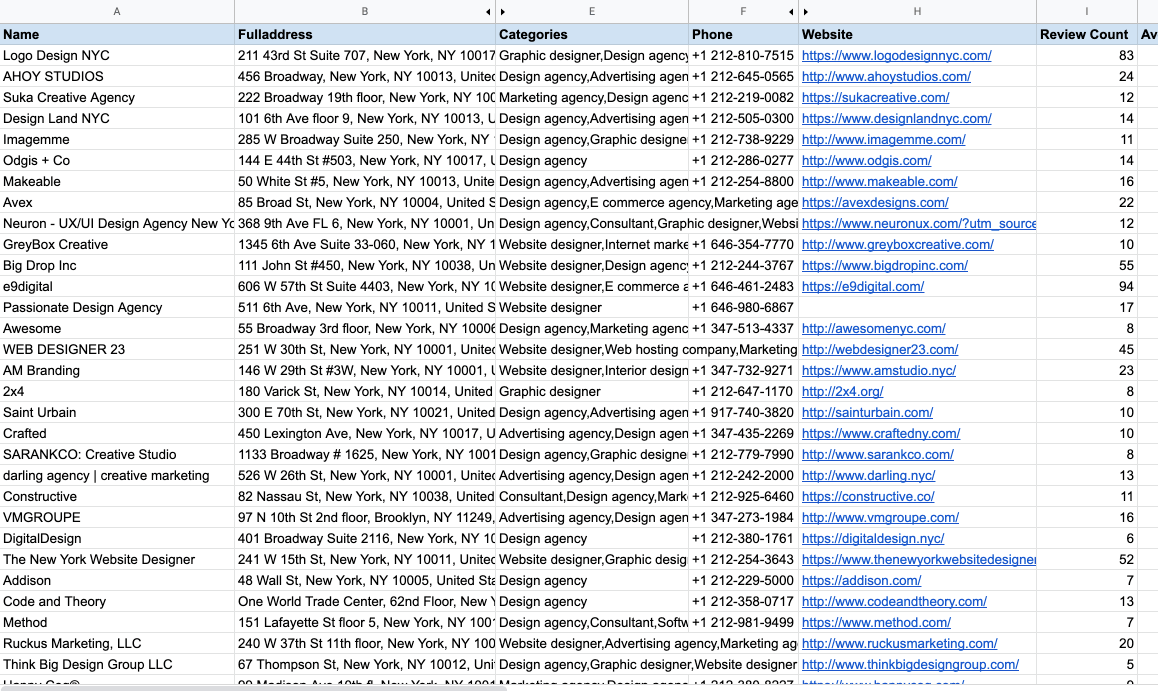
G Maps Extractor extracts business leads and export data to excel file.

This Google Maps Scraper will enabled you to extract data from Google Maps.

Google Maps Scraper - Excel file
Google Maps Scraper - Chrome Extension

Download the demo data of 'design agency near New york, NY' 

Three Billboards Outside Ebbing, Missouri (2017u) – even with the unusual suffix – remains one of the most provocative, emotionally volatile, and fiercely debated films of the 21st century. Written and directed by Martin McDonagh ( In Bruges , Seven Psychopaths ), the film is a searing fable of grief, rage, and the elusive nature of justice. It swept major awards, including four Oscars (Best Actress, Best Supporting Actor, and the BAFTA for Best Film), but also ignited a firestorm of controversy over its moral compass.

What follows is a spiral of violence: Dixon arrests Mildred’s friend; someone throws a milkshake at Mildred’s car; Mildred retaliates by hurling a Molotov cocktail at the police station while Dixon is inside (unaware of his presence). In a shocking turn, Willoughby commits suicide to spare his family from watching him deteriorate, leaving behind three letters – one for his wife, one for Mildred (explaining he couldn’t solve the case but respects her fight), and one for Dixon (urging him to become a better cop by learning to love rather than hate).

Three Billboards is not a comfortable film. It is a scar. And like Mildred’s billboards, it demands that you look – and then decide what kind of person you want to be. Keywords integrated: threebillboardsoutsideebbingmissouri2017u, Martin McDonagh, Frances McDormand, Sam Rockwell, movie analysis, film controversy.

A tidy resolution, heroic police portrayals, or trigger-free confrontations with rape and suicide.

Ebbing’s police force is incompetent at best, corrupt at worst. The film was released in 2017, amid Black Lives Matter protests and debates over police accountability. McDonagh, an Irish playwright, uses the American Midwest as a stage for universal questions about authority.

This article provides a comprehensive analysis of Three Billboards Outside Ebbing, Missouri , exploring its plot mechanics, character psychology, directorial style, and enduring legacy. The film opens on a haunting image: Mildred Hayes (Frances McDormand), a hardened, chain-smoking divorcée, drives past three derelict billboards on a forgotten road outside the fictional town of Ebbing, Missouri. Her daughter, Angela, was raped and murdered seven months earlier. The local police, led by beloved but ailing Chief Bill Willoughby (Woody Harrelson), has made no arrests.

The final scene is a masterpiece of ambiguity. Mildred and Dixon drive toward murder, both admitting, “We can decide along the way.” McDonagh refuses a cathartic ending. Do they kill the rapist? Turn back? Find peace? The audience is left hanging because that’s where real life hangs. 4. Controversies and Criticisms Despite its awards, the film drew sharp criticism. Many argued that Dixon’s redemption arc is undeserved and racially insensitive. The film largely ignores the perspectives of its Black characters (the town’s new chief, Abercrombie, is a decent man but sidelined). Critics from The Guardian and Slate called it “morally repugnant” for suggesting a racist cop can be redeemed after simply reading a letter.

The third act pivots when a stranger casually admits to raping and murdering a woman in a neighboring county – a crime identical to Angela’s. The man is a military officer with an airtight alibi for Angela’s death, but he is clearly a serial rapist. Dixon and Mildred, former enemies, decide to drive to Idaho to kill him, leaving the question of their moral redemption deliberately unresolved. Mildred Hayes (Frances McDormand) McDormand delivers a career-defining performance. Mildred is not a traditional hero. She is unflinching, profane, and cruel to those who love her (her son Robbie suffers immensely). Her grief has fossilized into pure, weaponized rage. The billboards are not about finding the killer – she knows they probably won’t – but about punishing a complacent system. Her famous line, “I guess I just don’t give a fuck,” is both liberating and tragic. Officer Jason Dixon (Sam Rockwell) Dixon is the film’s most controversial element. He begins as a caricature of the racist Southern cop: he tortures a black suspect, listens to opera while abusing prisoners, and physically assaults the billboard rental agent. Yet, after reading Willoughby’s letter, he undergoes a jagged, unconvincing-to-some redemption arc. He risks his life to recover a rape victim’s case file from a burning building, and by the end, he joins Mildred on a vigilante mission. The film asks: Can a violent bigot be redeemed without justice being served? Rockwell won an Oscar for making this monster pitiable. Chief Willoughby (Woody Harrelson) Willoughby is the moral fulcrum. He is a good man in an impossible position. His suicide is not for sympathy but for agency. His letters function as the film’s thematic thesis: anger is understandable, but love is the only way forward. He knows Mildred is wrong to target him, yet he forgives her. 3. Themes: The Impossibility of Closure Grief as violence: The film argues that unresolved trauma does not heal peacefully; it metastasizes. Mildred’s crusade destroys the billboard owner’s business, her own sanity, and nearly kills Dixon.

See what our customers say

Trusted by thousands happy customers worldwide.

Its good working and best Google Maps Scraper for India Google Map market, thanks boss.   John Harper
Great tool! Worked exactly as described. Save me hours and hours of time ! Thanks to the developer for providing it!   Mike Bradley
Great scraping tool that making my job much easier than others. It saves my time and cost. Awesome customer services. Support team helped me with few critical issues. Thank you!   Jeremy Hood
This is a Google Maps Scraper that works very well for scraping Google Maps, I use it every day it's part of the essential toolkit of b2b cold emails.   Vla Derach
I had the same luck. I spent days doing that, and then I came across this amazing scraper, simple, no disk space equired and easy to use. simply amazing, and the customer support is beyond expectations.   Kevin Joseph
The Google Maps Scraper is great! I could extract many business leads for the niche I want to serve.   Nourédine R

FAQs

What is the difference between a Free account and a Paid account?
  • Free account can only export up to 10 leads base on a keyword search results.
  • Paid account can export all leads base on a keyword search results.
  • See and compare all features
I just want to use G Maps Extractor once to export data. Is it possible?

Yes. You're free to take a subscription just for one month and cancel it when your work is done.

Can I cancel my subscription whenever I want?

Yes, you can change or cancel your plan at any time. Once you have canceled, you'll still have access to your premium plan until the end of your subscription cycle.